By: Andres Armijo
For the 2025–2026 academic year, my Upper School Spanish courses include Spanish I, Spanish II, and Advanced Spanish. Across all levels, my teaching is grounded in the belief that language is not an abstract system but a lived cultural experience. Literacy, conversation, and cultural knowledge develop most deeply when students engage with language through meaningful routines and real-world contexts.
Each class period follows a consistent structure. We begin with a warm-up that often includes singing and reciting, introducing vocabulary, pronunciation, rhythm, and cultural context in a natural and memorable way. Students then practice cursive handwriting, reinforcing literacy and attention to form. We move into focused work on verbs and vocabulary, and the remainder of class is devoted to project-based learning. These projects serve as gateways to experiential learning—sometimes through hands-on classroom activities and at other times through carefully designed off-campus excursions rooted in the customs and traditions of Nuevomexicano culture.
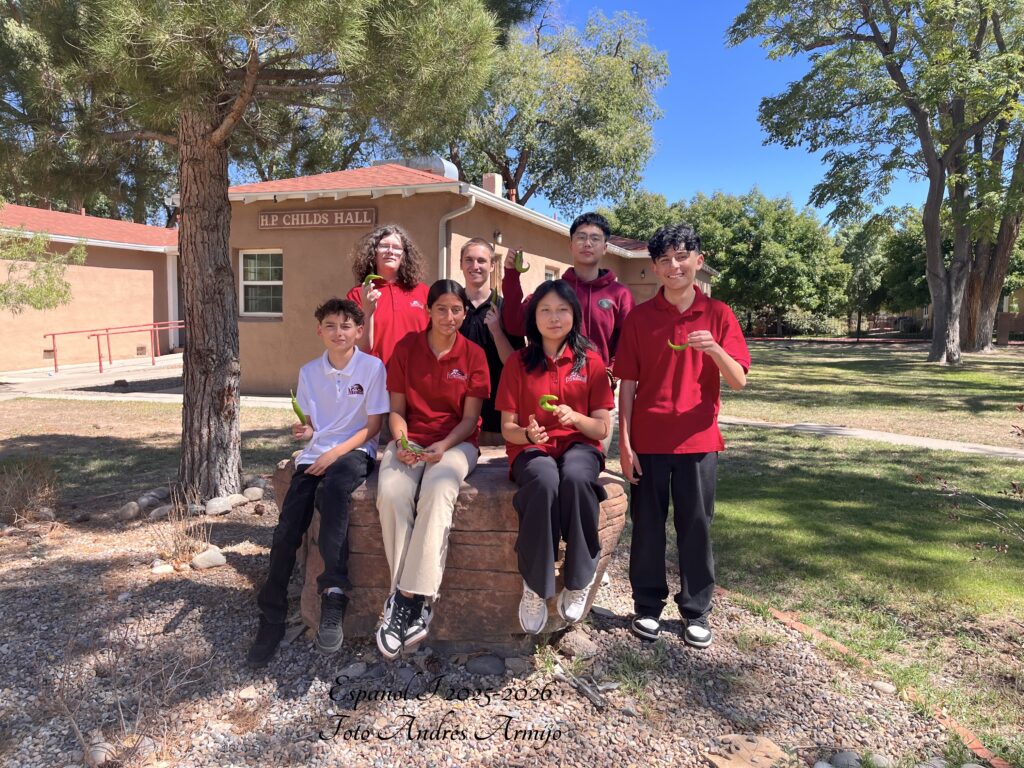
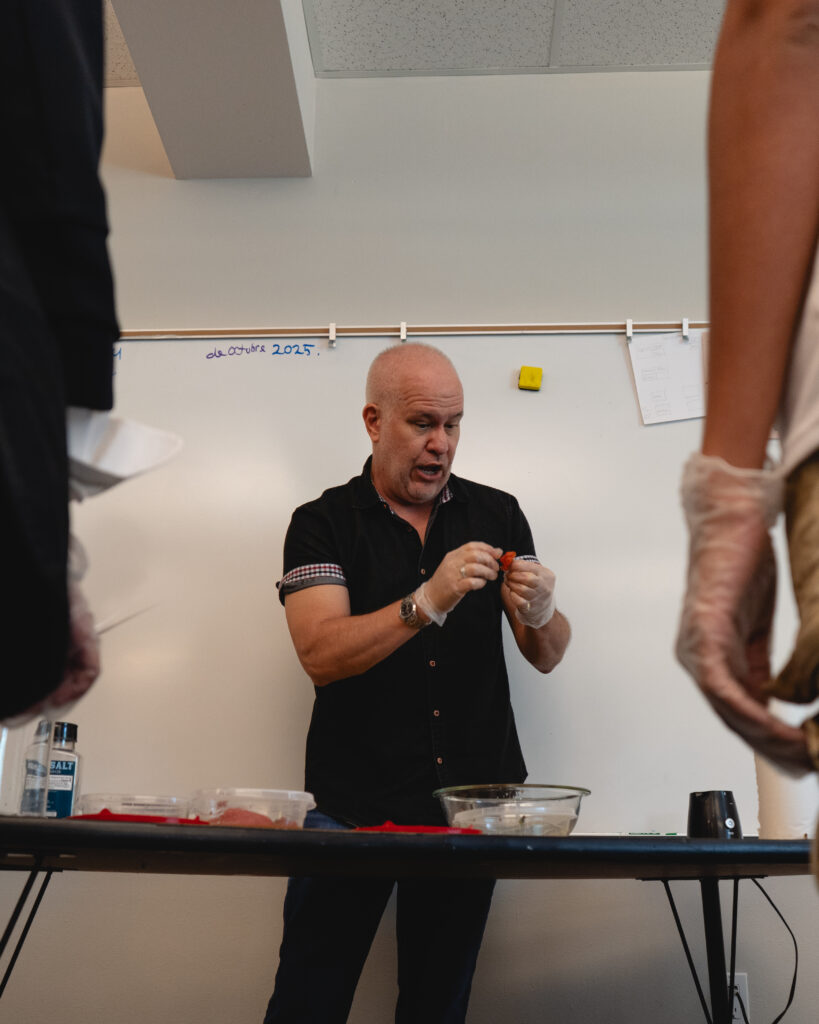
In Spanish I, one of our central thematic units is la cosecha, the harvest, taught as a living yearly tradition. We regularly checked the progress on the chile and tomatoes that I planted over the summer. Later we made our own salsa with the chiles and tomatoes harvested from the garden. Throughout the year, I ask students to approach these experiences with openness and a willingness to step outside their comfort zones. The traditions we study are deeply rooted in history, drawing from both our patria chica, Mexico, and our Patria Madre, Spain. These customs are familiar throughout the Spanish-speaking world and allow students to understand language as inseparable from culture, history, and place.
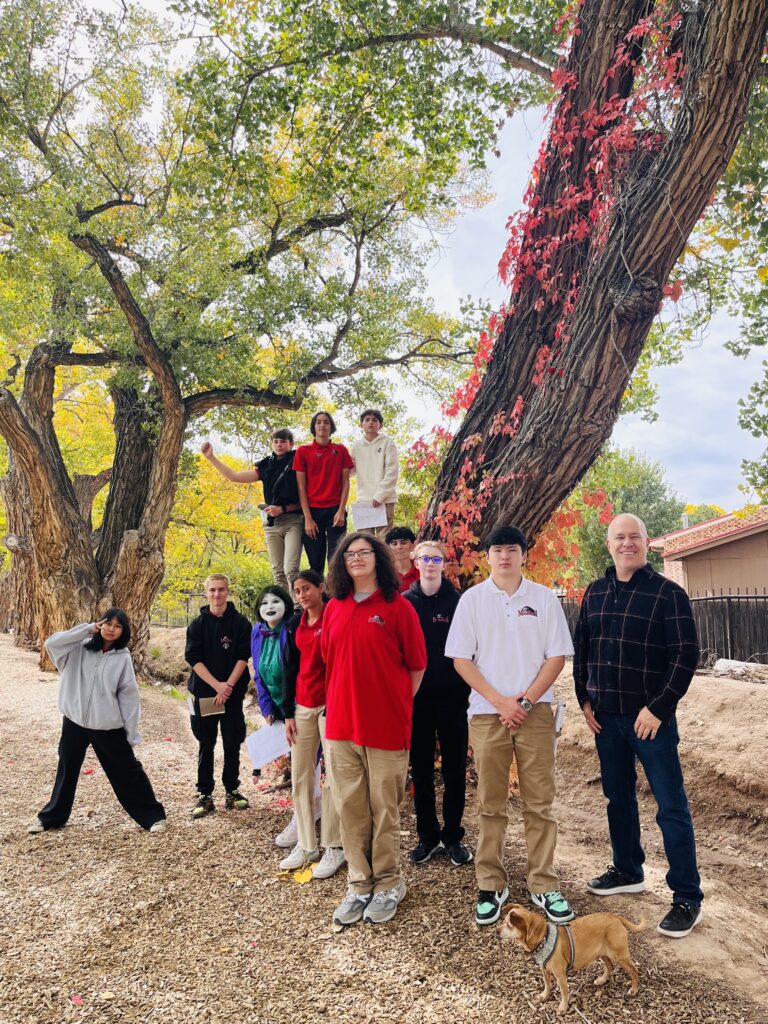
This year, Spanish I students traveled south to the Pueblo of Isleta to attend the annual feast day of San Agustín, the community’s patron saint. Spanish II and Advanced Spanish classes traveled to Laguna for the feast day of San José. North of Albuquerque, Spanish II and Advanced students gained insight into daily life in a Spanish colonial home at Casa San Isidro in Corrales, an extension of The Alburquerque Museum while Spanish I students visited the historic Gutiérrez-Hubbell House in Pajarito, where they experienced regional history through architecture, landscape, and Día de los Muertos. In the spring, we will continue south into the Río Abajo to climb Tomé Hill during Semana Santa, an annual tradition I began last year that connects history, geography, and cultural practice.
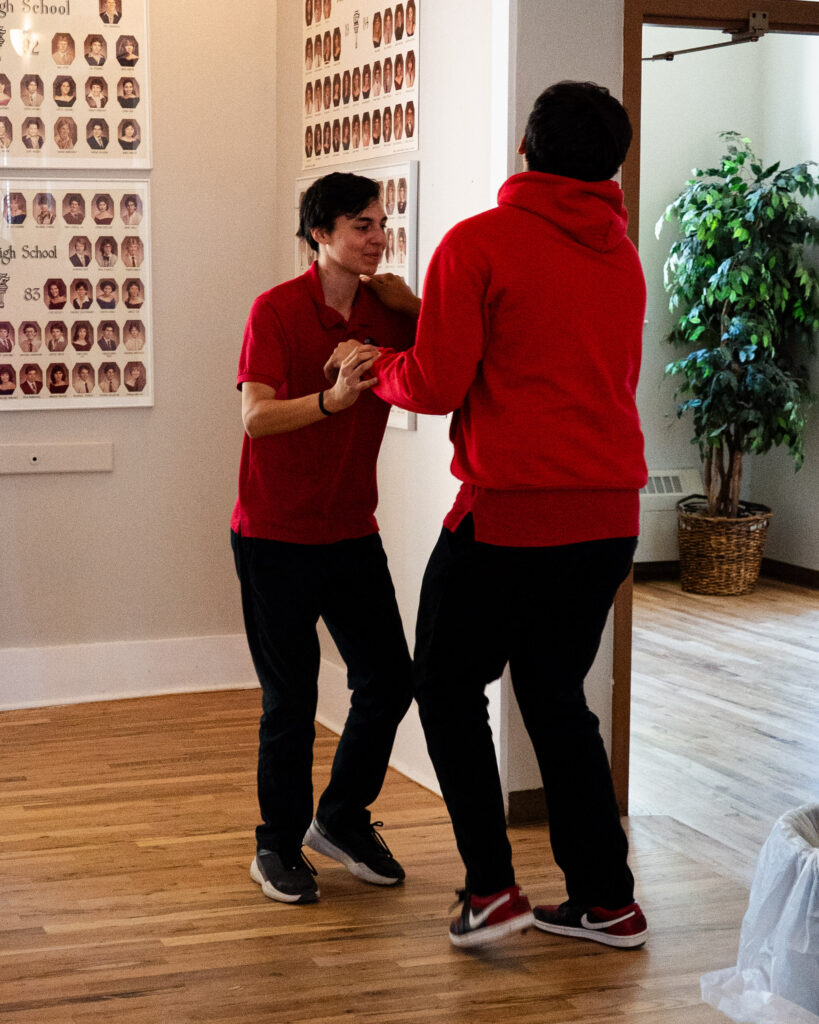
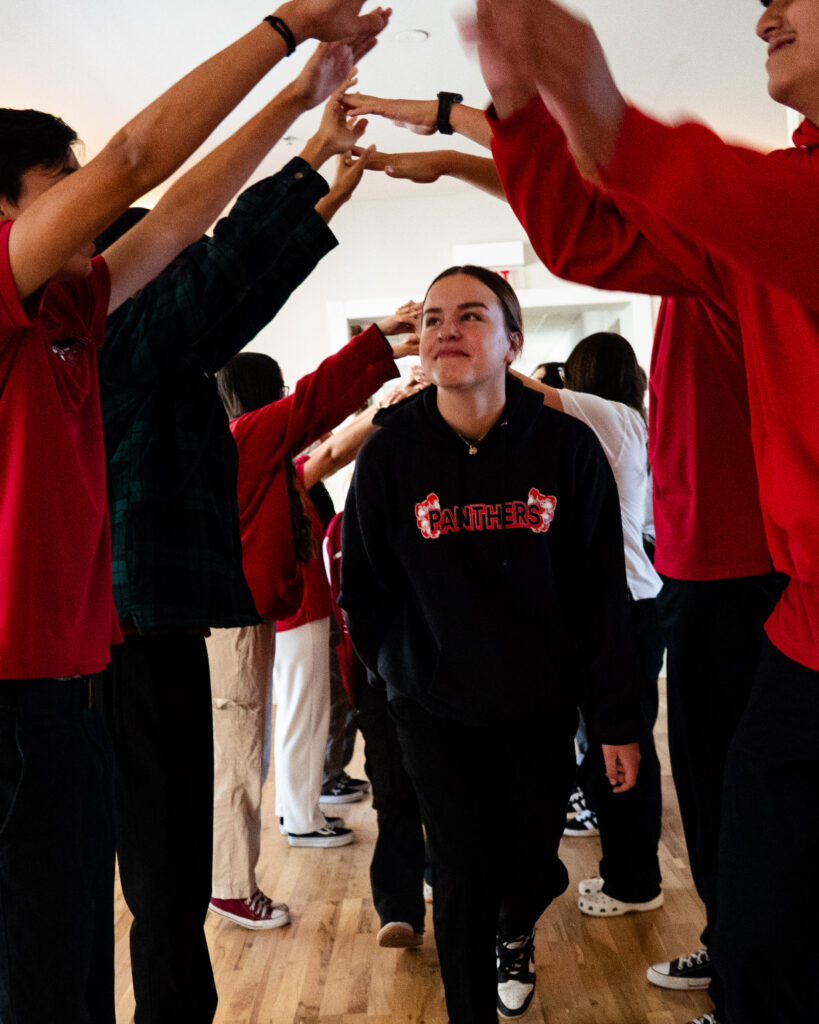
Community scholars and artists are an essential part of this work. Dr. Tessa Córdova visited our classroom in January 2024 to share the tradition of singing Los Manueles for the New Year, a custom she learned from her father, Dr. Arsenio Córdova of Taos. Students not only learned the tradition but composed their own songs, discovering their capacity for creative expression within a cultural framework. We will repeat this activity across all levels this January upon returning from Winter Break. In early November, Ms. Lucy Salazar joined us to teach Bailes de Salón and Bailes Nuevomexicanos, traditional dances performed at weddings, bailes, and fandangos throughout New Mexico—traditions I first learned as a young boy. This spring, I will also introduce students to flamenco through multiple approaches.
Project-based learning challenges students to use grammar and vocabulary thematically to be, as I remind them in Spanish, creativo, descriptivo y expresivo. For Día de los Veteranos, students conducted archival research at the Menaul Historical Library and Research Center, learning firsthand how historical inquiry is conducted.
While I do not teach religion, I point out how songs, texts and customs in Nuevomexicano culture intersect with spiritual and religious history. I also employ Menaul ‘s motto: Body, Mind & Spirit, or Mente, Cuerpo y Espíritu, as a guiding framework in my teaching. This year concluded with students creating candle holders inspired by hoja de lata craftsmanship after visiting Casa San Isidro. Guided by the chapel’s motto, Sea la Luz—“Be the Light”—students gained firsthand experience working with small sheets of tin. As a final warm-up, they learned Campanas de Belén and illustrated its lyrics, bringing together language, art, and tradition in a meaningful close to the semester.